Part 1
Verse:
〖诗曰〗:金鳞入手,得还防走,若论周旋,谨言缄口。
〖签释〗:你终于获得这宝贝,它金光闪闪,个大体肥,令你喜不自胜,简直得意忘形了。可是且记住--这玩意儿,你并没有真正拥有,目前还存在着走失,流失危机。发了大财,却又得而复失,一夜之间金子变成水流泻了,令人多么遗憾。有什么办法可以防范这一损失呢?这便是财不露白了。不但不以让人过目,更不以让人耳闻。那就必须紧紧闭上你的嘴巴,并且让知情人也闭上嘴。平时与人交谈,要小心谨慎不可触及这方面。拐弯抹角的话来套住你,也不要上当,不可搭腔。更要识别人家的激将法,保持冷静,一笑置之,缄,就是封闭的意思。过了一段日子,时过境迁,这些财宝才真正属于你自己。这一岁月,你将过得很平谈,难免紧张兮兮,可以选择象棋来消遣,不要做写字练书法之灯舞文弄墨的事情。因为文字是语言的另一种表达方式,极容暴露。
Part 2
Verse:
〖卦语〗:火遭水克 火灭其光 水势滔滔 源远流长。
〖释义〗:源流长的山溪,汇成滔滔的漫天洪水,铺天盖地地扑来,一下子熄灭了大火,连一星点火光和烟尘都没给留下。流年转逝,斗换星移,你生命的运程将发生一个重大的转折,你的火运已经结束,水运来临,未来的十年当中,由“水”为主体主宰着你的命运。 在未来的十年中你宜于居守下中,哪也不要去,换句话说,远行对你不利,徒劳往返劳命伤财但这并不意味着你没有财路,相反是极佳的,源远流长,来自北方的钱财势头,更大,随着其它方位的水一现汇流而入。 谈到时间对应上运旺盛于亥子丑年,也就是说1995,96,97年,其中96年为丙子年是最旺的年份,最佳月份则在农历十,十一,十二月,另外三月,四月均有短线偏财积少成多,也不要小视。 这十年中,你还将会有一个孩子出世,恭喜恭喜。
Friday, May 27, 2016

Monday, May 9, 2016
一心頂禮 南無不動如來不動佛心咒 22/6/2015

The Vajra family, to which Akshobhya belongs, is associated with the element of water. This is why the two colours of Vajra are blue or white. Bright white like sun reflecting off water, and blue, like the depths of the ocean. Even if the surface of the ocean is blown into crashing waves, the depths remain undisturbed, imperturbable. And though water may seem ethereal and weightless, in truth it is extremely heavy. Water flows into the lowest place and settles there. It carves through solid rock, but calmly, without violence. When frozen, it is hard, sharp, and clear like the intellect, but to reach its full potential, it must also be fluid and adaptable like a flowing river. These are all the essential qualities of Akshobhya.
Many wrathful tantric beings are represented as blue in colour because they embody the transmuted energy of hatred and aggression, into wisdom and enlightenment. (From Wikipedia, the free encyclopedia)
阿閦佛(梵文:अक्षोभ्य,Akshobhya,藏語:Sangs-rgyas mi-vkhrugs-pa;「閦」音「觸」)心咒,或作不動佛心咒,為東方妙喜世界阿閦佛(或名不動佛)之咒語,別名阿閦佛往生咒。
羅馬拼音:
Namo Ratna Trayaya.
Om. Kamkani Kamkani. Rotsani Rotsani. Trotrani Trotrani. Trasani Trasani.
Pratihana Pratihana. Sarva Karma Parampara.
Nime Sarva Sato(Sattva). Nantsaya Soha(Svaha).

德雅他
唵 槓嘎尼 槓嘎尼 羅渣尼 羅渣尼
卓達尼 卓達尼 乍沙尼 乍沙尼
乍帝哈納 乍帝哈納 薩哇噶瑪
巴南巴喇 納美 薩哇薩埵 念渣 梭哈
其他咒文版本:嗡。遏(ㄜˋ)葛拶(ㄗㄢˇ)吒(ㄓㄚˋ)多波。也啥。梭哈。
阿閦佛心咒: ong a bie zha zhi ga hong hong 唵 阿 別 炸 枝 嘎 吽 吽
阿閦佛心咒:南ná无mó薄bó伽qié伐fá帝dì 阿à閦chù鞞pí牙yá 莎suō哈hā
祈願 妙喜淨土 不動如來,加持一切有情眾生,消除世間對立,無明惡業、一切瞋恨,往生有情眾生 皆能超渡 往生善道。
Sunday, May 1, 2016
Seizures woke: 彭適為Peng Shiwei,清雍七年(1729)文林郎知平和縣事(正七品) 14/4/2014
 《彭适为》江南无锡人,文林郎知平和县事。“文林郎”是明、清时用来授正七品文官的散官名;“知平和县事”是指题匾者在平和担任知县。 相关史料记有,题匾者彭适为江南无锡人,雍正七年(1729年)至雍正十二年任平和知县。
《經義敦世》清代雍正老匾额皇帝恩诏授予“寿官”。
清代雍正年间,漳州平和县有一位年届耄耋的老寿星,不仅曾是国子监太学生,更因年高德劭获得皇帝恩诏授予的“寿官”名衔,从而获得了地方官员的赠匾。
匾额正中是手书的“经义世敦”4个烫金大字,匾上款为“文林郎知平和县事彭适为”,匾下款为“优行国子监太学生恩锡八袠寿官赖碘立”。
“文林郎”在清朝时为正七品文官所授的散官名,“知平和县事”是指他在平和(今漳州平和县)担任知县。查《平和县志》记载,彭适为江南无锡人,于清雍正七年(1729年)任平和知县。此匾当是彭适出任平和知县时所书,因此这块匾额的书写年代距今已有近300年的历史。
“优行”是指品学优良,“国子监太学生”是指在太学读书的生员。清朝时,国子监是全国最高学府与教育行政管理机构,设立在紫禁城内,相当于全国唯一的一所国立大学。在古代,进人京师国子监学习深造是件光宗耀祖的大事,肄业后还有机会被挑选做官,因此进人国子监就相当于一只脚已经步人仕途。
“八袠”是指被授匾者已经年过八十。“寿官”是指在清代养老制度中,由地方推选并经皇帝恩诏颁下,授予老人冠带的一种名誉头衔。
《七品 文林郎 征仕郎》
一,頂戴,二,蟒袍,三,補服,四,腰帶,五,坐褥。
七品 素金頂 五蟒四爪 (犀牛) 紫鴛鴦
〖卦语〗:
有田一亩 尽可耕耘 无穷收获 都在西成
〖释义〗:
田地,是你赖以生存之本也是发达,进取的本源,这就说明你所从事的行业是相对安定,无需奔波劳碌,且有边有框,规规矩矩,不出方寸,这也让人联想到美术家的画幅,文化人的稿纸,财会人机的算盘和计算机,运动竞技场,棋盘,舞台,屏幕。。。。。。。 总之,这样一类的行业对你都是适合的,辛勤耕耘,充分发挥,必有无穷收获, 但收获的楔机机遇也是一定的,那便与方位紧密相关的西方,换言之,西,是你成功的吉祥,幸运的方位,西方庚辛金。庚为阳金,辛为阴金;西方兑纳丁阴,白虎护神庇佑,划时节为秋,吉祥色彩为白,多遇女贵人帮扶,女=性则多遇男贵人资助,但有小妾(第三者)之嫌 东方文化人,每每在西方学有所成,业绩斐然,令世人刮目。西方先进的科技,也是东方文化发展的借鉴,当然不能保守地自锁心门,所以此处所谓西方,不能单纯理解为你的籍贯以西的中国本土。
Saturday, April 16, 2016
Dalai Lama and Khenpo Tsultrim Lodrö Rinpoche 15/3/2016


Mantras could be induced in the phase space of time may also duration no difference like that three days tantamount to be 3 hours.
In dreamed Classmate signature the AG 12/3/2016
Part 1
Verse:
〖诗曰〗:圆又缺,缺又圆,低低密密,要周旋,时来始见缘。
Explanation:
〖签释〗:这支签也是回答有关缘份的预测。当然也不排除这经事项但都可以作一个事参照体味。"好事多磨"。此事翻来复,将会有二交以上的反复。民以不管是处于低潮,阻力层逆境,还是顺顺当当的好时候都要控制自己的情绪,用意地对待,心尽按照计划,把事情办得圆满,让所有的人都感到高兴,至少是不直接伤害任何人的利益。时间一到,姻缘就会明明白白地呈现出来,谁都高高兴兴地承认喧个事实。时间要多久呢?月儿圆又缺,缺又圆,整整一个月,不知你有没有这样的份耐心?注意谦和待人,礼数周全,紧密"盯人",控制愤怒,必获胜。
Part 2
Verse:
〖卦语〗:欲得月中兔,须凭桃李拂,高山来接引,双喜照双眉。
Explanation:
〖释义〗:要摘下天上星星,月亮,那是不可能的。可是,要得岁月中的玉兔,那也许不难办不到,只需外来的条件,甚至双喜临门也完全可能。 首先要认识一下你所追求的目标:卯为琼林,属兔,位置在正东方,月中之兔,当然是贵人一路。另外如指事情而言,主要是升学,升职的追求了。 第一个条件是风。桃枝条款摆,花枝摇曳,靠的都是风,巽如风行天下故为鸡,外表象征华丽的装饰巽属木,成事的时间在:"甲、乙、寅、卯,年、月、日、时。辰,年、月、日、时也大有希望。如投考文职方面,必有升迁。东南方向,一位草木旁姓氏的人,变助你一臂之力,或可为重要媒介。 第二个条件是山,艮为山,这个贵人在你东北方向,将成为你你的导师,或者是岳父。你的姓氏笔划中有山作偏旁,有了他的接纳指引,事情就成了。
Verse:
〖诗曰〗:圆又缺,缺又圆,低低密密,要周旋,时来始见缘。
Explanation:
〖签释〗:这支签也是回答有关缘份的预测。当然也不排除这经事项但都可以作一个事参照体味。"好事多磨"。此事翻来复,将会有二交以上的反复。民以不管是处于低潮,阻力层逆境,还是顺顺当当的好时候都要控制自己的情绪,用意地对待,心尽按照计划,把事情办得圆满,让所有的人都感到高兴,至少是不直接伤害任何人的利益。时间一到,姻缘就会明明白白地呈现出来,谁都高高兴兴地承认喧个事实。时间要多久呢?月儿圆又缺,缺又圆,整整一个月,不知你有没有这样的份耐心?注意谦和待人,礼数周全,紧密"盯人",控制愤怒,必获胜。
Part 2
Verse:
〖卦语〗:欲得月中兔,须凭桃李拂,高山来接引,双喜照双眉。
Explanation:
〖释义〗:要摘下天上星星,月亮,那是不可能的。可是,要得岁月中的玉兔,那也许不难办不到,只需外来的条件,甚至双喜临门也完全可能。 首先要认识一下你所追求的目标:卯为琼林,属兔,位置在正东方,月中之兔,当然是贵人一路。另外如指事情而言,主要是升学,升职的追求了。 第一个条件是风。桃枝条款摆,花枝摇曳,靠的都是风,巽如风行天下故为鸡,外表象征华丽的装饰巽属木,成事的时间在:"甲、乙、寅、卯,年、月、日、时。辰,年、月、日、时也大有希望。如投考文职方面,必有升迁。东南方向,一位草木旁姓氏的人,变助你一臂之力,或可为重要媒介。 第二个条件是山,艮为山,这个贵人在你东北方向,将成为你你的导师,或者是岳父。你的姓氏笔划中有山作偏旁,有了他的接纳指引,事情就成了。
Friday, April 1, 2016
Heng恆 Sign of 下巽上震 6/2/2016, 22/11/2017
 1. 恆:亨,无咎,利貞,利有攸往。
Heng: Heng indicates successful progress and no error (in what it denotes). But the advantage will come from being firm and correct; and movement in any direction whatever will be advantageous.
彖傳:恆,久也。剛上而柔下,雷風相與,巽而動,剛柔皆應,恆。恆亨无咎,利貞;久於其道也,天地之道,恆久而不已也。利有攸往,終則有始也。日月得天,而能久照,四時變化,而能久成,聖人久於其道,而天下化成;觀其所恆,而天地萬物之情可見矣!
Tuan Zhuan: Heng denotes long continuance. The strong (trigram) is above, and the weak one below; (they are the symbols of) thunder and wind, which are in mutual communication; (they have the qualities of) docility and motive force; their strong and weak (lines) all respond, each to the other: - these things are all found in Heng. (When it is said that) 'Heng indicates successful progress and no error (in what it denotes); but the advantage will come from being firm and correct,' this indicates that there must be long continuance in its way of operation. The way of heaven and earth is to be long continued in their operation without stopping. (When it is said that) 'Movement in any direction whatever will be advantageous,' this implies that when (the moving power) is spent, it will begin again. The sun and moon, realising in themselves (the course of Heaven), can perpetuate their shining. The four seasons, by their changing and transforming, can perpetuate their production (of things). The sages persevere long in their course, and all under the sky are transformed and perfect. When we look at what they continue doing long, the natural tendencies of heaven, earth, and all things can be seen.
象傳:雷風,恆;君子以立不易方。
Xiang Zhuan: (The trigram representing) thunder and that for wind form Heng. The superior man, in accordance with this, stands firm, and does not change his method (of operation).
2. 初六:浚恆,貞凶,无攸利。
The first SIX, divided, shows its subject deeply (desirous) of long continuance. Even with firm correctness there will be evil; there will be no advantage in any way.
象傳:浚恆之凶,始求深也。
Xiang Zhuan: 'The evil attached to the deep desire for long continuance (in the subject of the first line)' arises from the deep seeking for it at the commencement (of things).
3. 九二:悔亡。
The second NINE, undivided, shows all occasion for repentance disappearing.
象傳:九二悔亡,能久中也。
Xiang Zhuan: 'All occasion for repentance on the part of the subject of the second NINE, (undivided,), disappears:' - he can abide long in the due mean.
4. 九三:不恆其德,或承之羞,貞吝。
The third NINE, undivided, shows one who does not continuously maintain his virtue. There are those who will impute this to him as a disgrace. However firm he may be, there will be ground for regret.
象傳:不恆其德,无所容也。
Xiang Zhuan: 'He does not continuously maintain his virtue:' - nowhere will he be borne with.
5. 九四:田无禽。
The fourth NINE, undivided, shows a field where there is no game.
象傳:久非其位,安得禽也。
Xiang Zhuan: (Going) for long to what is not his proper place, how can he get game?
6. 六五:恆其德,貞,婦人吉,夫子凶。
The fifth SIX, divided, shows its subject continuously maintaining the virtue indicated by it. In a wife this will be fortunate; in a husband, evil.
象傳:婦人貞吉,從一而終也。夫子制義,從婦凶也。
Xiang Zhuan: 'Such firm correctness in a wife will be fortunate:' - it is hers to the end of life to follow with an unchanged mind. The husband must decide what is right, and lay down the rule accordingly: - for him to follow (like) a wife is evil.
7. 上六:振恆,凶。
The topmost SIX, divided, shows its subject exciting himself to long continuance. There will be evil.
象傳:振恆在上,大无功也。
Xiang Zhuan: 'The subject of the topmost line is exciting himself to long continuance:' - far will he be from achieving merit.
(by James Legge)
Tuesday, March 22, 2016
Sign 1/12/2015
Part 1
Verse:
〖籤詩〗﹕休眷戀,誤前程,終鬧亂,出門庭。
Explanation:
〖簽釋〗﹕英雄氣短,兒女情長。這句話常常用來形容因情所累誤了大事,造成終生遺恨的人和事。正如一句鼓勵男兒志在四方的俗話,叫做“捨不得嬌妻,做不了漢”。當然,這“好漢”也不是人人要做。也不是非要捨得靚嬌妻,才能做條好漢。不能一概而論,這題外話,也可不談。總之,你現百所眷念的這個人,終究會要壞你的事,必須馬上離開她。如果還是執迷不悟。繼續將這種關係體保持下去,輕則影響本人的前程,嚴重地將破壞一個家庭,造成大亂,家破人亡,受到黨籍/朋黨開除,或走上法庭也未可知。這是一次嚴重的警告,也是一劑苦口良藥。地球照樣還會旋轉,太陽明天還會升起來,你說是不是呢?
Part 2
Verse:
〖卦語〗﹕秋霜肅,夏日炎,新花鮮了舊花淹。世情看冷暖,逢者不須言。
Explanation:
〖釋義〗﹕此事於夏秋之季,多不吉利。新花稀落落,舊花殘敗,正是換季之期,青黃不接之運程。這個時候,你會常常看到人家的白眼,霜臉,處處遭際冷遇,缺少朋友緣份,與早期大不相同。人情似紙,張張薄,一捅就破。曾經抬你捧你的人,如今都冷嘲熱諷,或者掉頭而去,或者隔岸觀火,漠不相關。這種時候去求告於人,簡直不要開口,既無益處,反而煩惱。是那相知的人,古道熱腸,不用你開口也會主動幫助你的,正所謂“疾風知勁草,板蕩識忠臣。”。為今之計,唯有自己救自己。萬不可因一時挫折,便心死如灰,倒了志氣。密地裡作好準諸般,養足元氣,調整體能,只待明春春雷滾動,再重新奮起。“江東子弟多豪俊,捲土重來未可知。”
Verse:
〖籤詩〗﹕休眷戀,誤前程,終鬧亂,出門庭。
Explanation:
〖簽釋〗﹕英雄氣短,兒女情長。這句話常常用來形容因情所累誤了大事,造成終生遺恨的人和事。正如一句鼓勵男兒志在四方的俗話,叫做“捨不得嬌妻,做不了漢”。當然,這“好漢”也不是人人要做。也不是非要捨得靚嬌妻,才能做條好漢。不能一概而論,這題外話,也可不談。總之,你現百所眷念的這個人,終究會要壞你的事,必須馬上離開她。如果還是執迷不悟。繼續將這種關係體保持下去,輕則影響本人的前程,嚴重地將破壞一個家庭,造成大亂,家破人亡,受到黨籍/朋黨開除,或走上法庭也未可知。這是一次嚴重的警告,也是一劑苦口良藥。地球照樣還會旋轉,太陽明天還會升起來,你說是不是呢?
Part 2
Verse:
〖卦語〗﹕秋霜肅,夏日炎,新花鮮了舊花淹。世情看冷暖,逢者不須言。
Explanation:
〖釋義〗﹕此事於夏秋之季,多不吉利。新花稀落落,舊花殘敗,正是換季之期,青黃不接之運程。這個時候,你會常常看到人家的白眼,霜臉,處處遭際冷遇,缺少朋友緣份,與早期大不相同。人情似紙,張張薄,一捅就破。曾經抬你捧你的人,如今都冷嘲熱諷,或者掉頭而去,或者隔岸觀火,漠不相關。這種時候去求告於人,簡直不要開口,既無益處,反而煩惱。是那相知的人,古道熱腸,不用你開口也會主動幫助你的,正所謂“疾風知勁草,板蕩識忠臣。”。為今之計,唯有自己救自己。萬不可因一時挫折,便心死如灰,倒了志氣。密地裡作好準諸般,養足元氣,調整體能,只待明春春雷滾動,再重新奮起。“江東子弟多豪俊,捲土重來未可知。”
Monday, March 21, 2016
作明佛母(Kurukulle)又名咕噜咕列佛母 8/11/2015
Kurukulle mantra (Rigjedma - Kurukulla)
Kurukulle or Kurukulla, also known as Rigjedma is the Tibetan Buddhist Goddess of Love, Lust, Sex, Magick, Enchantment and Liberation-Bobby Octo
Kurukulla is a goddess whose body is usually depicted in red with four arms, holding a bow and arrows made of flowers. She dances in a Dakini-pose and crushes the asura Rahu (the one who devours the sun). According to Vedic astrology, Rahu is a snake with a demon head (Navagraha) who represents the ascending lunar node.
She is considered either an incarnation of Amida Buddha, one of Tara's forms, or a transformation of Heruka. -Wikipedia
堪布貝瑪千貝仁波切─
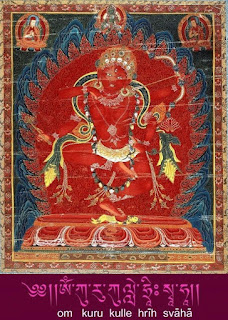 咕嚕咕咧佛母又名作明佛母,是密教的愛神,也是司掌權威的祕密本尊,面孔含笑帶怒,含笑是攝召眾生,具有圓滿情愛與增進人緣的大威神力。帶怒是降伏諸魔,具足大權威勢。
若以虔誠心修持將獲得 :
1 . 真實語妙音成就
2. 空樂俱生智成就
3. 自在攝三界成就
4. 成辦四事業成就
5. 得生天界成就
6. 破黑暗蔽障成明性
7. 斷一切妄想分別執著
8. 迅速圓滿福慧二資糧
9. 增上無漏大樂智慧
10.並可勾召含識之心
11.上蒙垂愛下得崇敬
12.得一切諸佛菩薩聲聞緣覺聖眾之加持
13.得一切帝釋梵天自在天之威權,福德,財富之加持
14.一切世間及出世間智
15.不死之身長壽成就
Kurukulle or Kurukulla, also known as Rigjedma is the Tibetan Buddhist Goddess of Love, Lust, Sex, Magick, Enchantment and Liberation-Bobby Octo
Kurukulla is a goddess whose body is usually depicted in red with four arms, holding a bow and arrows made of flowers. She dances in a Dakini-pose and crushes the asura Rahu (the one who devours the sun). According to Vedic astrology, Rahu is a snake with a demon head (Navagraha) who represents the ascending lunar node.
She is considered either an incarnation of Amida Buddha, one of Tara's forms, or a transformation of Heruka. -Wikipedia
堪布貝瑪千貝仁波切─

om kuru kulle hrih svaha
嗡 咕汝 咕列 耶 梭哈
1 . 真實語妙音成就
2. 空樂俱生智成就
3. 自在攝三界成就
4. 成辦四事業成就
5. 得生天界成就
6. 破黑暗蔽障成明性
7. 斷一切妄想分別執著
8. 迅速圓滿福慧二資糧
9. 增上無漏大樂智慧
10.並可勾召含識之心
11.上蒙垂愛下得崇敬
12.得一切諸佛菩薩聲聞緣覺聖眾之加持
13.得一切帝釋梵天自在天之威權,福德,財富之加持
14.一切世間及出世間智
15.不死之身長壽成就
願以此功德,普及於一切。
我等與眾生,皆共成佛道。
Saturday, February 6, 2016
Jie 解 Sign of 下坎上震 1/9/2015
 1. 解:利西南,无所往,其來復吉。有攸往,夙吉。
Jie: In (the state indicated by) Jie advantage will be found in the south-west. If no (further) operations be called for, there will be good fortune in coming back (to the old conditions). If some operations be called for, there will be good fortune in the early conducting of them.
彖傳:解,險以動,動而免乎險,解。解利西南,往得眾也。其來復吉,乃得中也。有攸往夙吉,往有功也。天地解,而雷雨作,雷雨作,而百果草木皆甲坼,解之時大矣哉!
Tuan Zhuan: In Jie we have (the trigram expressive of) peril going on to that expressive of movement. By movement there is an escape from the peril: - (this is the meaning of) Jie. 'In (the state indicated by) Jie, advantage will be found in the south-west:' - the movement (thus) intimated will win all. That 'there will be good fortune in coming back (to the old conditions)' shows that such action is that of the due medium. That 'if some operations be necessary, there will be good fortune in the early conducting of them' shows that such operations will be successful. When heaven and earth are freed (from the grasp of winter), we have thunder and rain. When these come, the buds of the plants and trees that produce the various fruits begin to burst. Great indeed are the phenomena in the time intimated by Jie.
象傳:雷雨作,解;君子以赦過宥罪。
Xiang Zhuan: (The trigram representing) thunder and that for rain, with these phenomena in a state of manifestation, form Jie. The superior man, in accordance with this, forgives errors, and deals gently with crimes.
2. 初六:无咎。
The first SIX, divided, shows that its subject will commit no error.
象傳:剛柔之際,義无咎也。
Xiang Zhuan: The strong (fourth) line and the weak line here are in correlation: - we judge rightly in saying that 'its subject will commit no error.'
3. 九二:田獲三狐,得黃矢,貞吉。
The second NINE, undivided, shows its subject catch, in hunting, three foxes, and obtain the yellow (= golden) arrows. With firm correctness there will be good fortune.
象傳:九二貞吉,得中道也。
Xiang Zhuan: 'The good fortune springing from the firm correctness of the second NINE, (undivided),' is due to its subject holding the due mean.
4. 六三:負且乘,致寇至,貞吝。
The third SIX, divided, shows a porter with his burden, (yet) riding in a carriage. He will (only) tempt robbers to attack him. However firm and correct he may (try to) be, there will be cause for regret.
象傳:負且乘,亦可醜也,自我致戎,又誰咎也。
Xiang Zhuan: For 'a porter with his burden to be riding in a carriage' is a thing to be ashamed of. 'It is he himself that tempts the robbers to come:' - on whom besides can we lay the blame? (See Appendix III, i, 48.)
5. 九四:解而拇,朋至斯孚。
(To the subject of) the fourth NINE, undivided, (it is said), 'Remove your toes. Friends will (then) come, between you and whom there will be mutual confidence.'
象傳:解而拇,未當位也。
Xiang Zhuan: 'Remove your toes:' - the places (of this line and of the third and first) are all inappropriate to them.
6. 六五:君子維有解,吉;有孚于小人。
The fifth SIX, divided, shows (its subject), the superior man (= the ruler), executing his function of removing (whatever is injurious to the idea of the hexagram), in which case there will he good fortune, and confidence in him will be shown even by the small men.
象傳:君子有解,小人退也。
Xiang Zhuan: When 'the superior man executes his function of removing (whatever is injurious to the idea of the hexagram),' small men will of themselves retire.
7. 上六:公用射隼于高墉之上,獲之,无不利。
In the sixth SIX, divided, we see a feudal prince (with his bow) shooting at a falcon on the top of a high wall, and hitting it. (The effect of his action) will be in every way advantageous.
象傳:公用射隼,以解悖也。
Xiang Zhuan: 'A prince with his bow shoots a falcon:' - thus he removes (the promoters of) rebellion.
(by James Legge)
Friday, February 5, 2016
Sign 22/8/2015
Part 1
Verse:
〖诗曰〗:门内起干戈,亲仇两不和,朱衣临日月,始觉笑呵呵。
〖签释〗:干戈,就是战争,人斗,窝里闹,都是同门之争,手足相残,兄弟反目,亲人变成仇人。这真是令亲者痛仇者快的事。两虎相争必有一伤。受伤者是自己的亲人,这怎么也说不过去,决非好事,一位身着朱衣的女性出现了。这位红衣女郎象太了产热情,象月亮一般温柔。她给这个杀得天昏地暗的家带来了光明,使兄弟之间明白了自己的错误,终于握手言和,重归于好,恢复了往日的宁静。日和月,组合起来便是光明,明亮,明白,另一组合的间义就是一个昼夜,二十四小时。这也意味着问题解决的时间。这个红衣女郎,是值得赞美的,她将成为这个家族的精神支柱。这位来自北方的姑娘,她的名字中可能带有冰,霞,虹,,彩,明,霓,月,或带有金旁的姓,如钱,钊,刘,钟,银,刚。
Part 2
Verse:
〖卦语〗:蜗角蝇头利,而今已变通,草头人笑汝,宜始不宜终。
〖释义〗:苏东坡有词云:"蜗角虚名,蝇头微早,算来着甚奔忙?事皆前定谁弱谁又强!" 本签以经商之道为例,论及多方,还需细细品味,方能识得真谛。 蜗角蝇头之利为数区区,多不为人重视。若论生意经,将本求利,去辄便是求利几倍几番,多多益善。这种生意经,如今不行了,变成了另一回事儿,那便是薄利多销,广种薄收,最终收获信是多多,且能长久。你所执的生意方略就是这样,也应当如此。 可是却遭到一位草头姓氏朋友的反对和讥笑,认为你太嫩了点儿,不通生意经。其实这位先生才真是食古不化,不懂得变通的道理。这样一个时代,不这样行吗?他的生意经将是不可能长久的,而且风险值过大,必遭到失败。 走自己的路,让人家去嘲笑好了。
Verse:
〖诗曰〗:门内起干戈,亲仇两不和,朱衣临日月,始觉笑呵呵。
〖签释〗:干戈,就是战争,人斗,窝里闹,都是同门之争,手足相残,兄弟反目,亲人变成仇人。这真是令亲者痛仇者快的事。两虎相争必有一伤。受伤者是自己的亲人,这怎么也说不过去,决非好事,一位身着朱衣的女性出现了。这位红衣女郎象太了产热情,象月亮一般温柔。她给这个杀得天昏地暗的家带来了光明,使兄弟之间明白了自己的错误,终于握手言和,重归于好,恢复了往日的宁静。日和月,组合起来便是光明,明亮,明白,另一组合的间义就是一个昼夜,二十四小时。这也意味着问题解决的时间。这个红衣女郎,是值得赞美的,她将成为这个家族的精神支柱。这位来自北方的姑娘,她的名字中可能带有冰,霞,虹,,彩,明,霓,月,或带有金旁的姓,如钱,钊,刘,钟,银,刚。
Part 2
Verse:
〖卦语〗:蜗角蝇头利,而今已变通,草头人笑汝,宜始不宜终。
〖释义〗:苏东坡有词云:"蜗角虚名,蝇头微早,算来着甚奔忙?事皆前定谁弱谁又强!" 本签以经商之道为例,论及多方,还需细细品味,方能识得真谛。 蜗角蝇头之利为数区区,多不为人重视。若论生意经,将本求利,去辄便是求利几倍几番,多多益善。这种生意经,如今不行了,变成了另一回事儿,那便是薄利多销,广种薄收,最终收获信是多多,且能长久。你所执的生意方略就是这样,也应当如此。 可是却遭到一位草头姓氏朋友的反对和讥笑,认为你太嫩了点儿,不通生意经。其实这位先生才真是食古不化,不懂得变通的道理。这样一个时代,不这样行吗?他的生意经将是不可能长久的,而且风险值过大,必遭到失败。 走自己的路,让人家去嘲笑好了。
Saturday, January 2, 2016
Yellow Jamabala Mantra: OM ZAMBALA ZALENDHRAYE SOHA 23/2/2015
 The Yellow Jambhala is considered the most popular and powerful of the Wealth Gods. It is thought to be the manifestation of Buddha Ratnasambhava, the Buddha of Giving. It is said you must practice Buddhism using correct procedures to gain the most powerful blessings from him. He is usually shown sitting on a lotus, sun and moon disk. As with all of the Jambhala, he holds a mongoose in his left hand which produces jewels to give to the needy.
He protected the dharma and if anyone call his name, he will come and help the person. If one has trouble with finance or anything, one can chant his mantra and he will come and help. But one must have a bodhi mind and practice Buddhism properly to attain his blessings. One can also gain wealth, wisdom, intelligence and at last! Attain Buddha hood!.
The Yellow Jambhala is thought to be the most effective for those with a Chinese Astrological lucky element of earth and having the animal sign of a cow, dragon, sheep, or dog. You will receive not only wealth but wisdom and intelligence if worshipped properly. The Mantra you would recite is
"Om Zambala Zalendhraye Soha".
嗡。藏巴拉。札楞札耶。梭哈
據《大藏經》載,釋迦牟尼佛讓黃財神解說其咒功德。黃財神說其咒時,三千大千世界即發六種震動。眾不退轉菩薩及眾夜叉同聲讚歎,前未所聞,此等稀有殊勝之法。釋尊言說,此咒是痛苦無依眾生之解脫皈依處。非但持誦,僅只視咒,即不生病。持誦此咒,無有愁苦憂惱,身體疼痛不生。此咒猶如寶瓶、如意寶、如意樹,隨其所欲,滿眾生所願。若有人能持此咒者,衣食財寶多聞聰慧無病長壽,隨所願求,無不遂意,獲福甚多。無福報善根之人,無緣睹聞,乃至書寫持誦此咒。佛言,念誦此咒之人,我必攝受,入不退轉解脫之道路,得不退轉無上菩提,不墮入惡道,成為智人賢者恭敬處。此咒功德,所有神龍夜叉聚於一處,亦評說不盡;菩薩及聲聞緣覺等大智慧身,無能得知;諸佛讚說不已,亦永無盡處。此陀羅尼咒,為三世佛母。諸佛恆常加持,持此咒人,能獲六度十地之功德。(by http://www.yaoshirulai.org/Buddha/?p=622)
Sunday, November 8, 2015
観自在菩薩真言 30/12/2014 Dream 12/8/2015, 28/12/2015

聖観音-
オン・アロリキャ・ソワカ(Om arolik svaha)
【觀世音菩薩滅業障真言】
《安樂妙寶》中說:此真言是一切蓮華部心。
能成一切三世勝法,即正觀音咒,又名滅業障咒。
「嗡。阿 噜 勒 繼 娑婆訶。」
【觀世音菩薩滅業障真言】
《安樂妙寶》中說:此真言是一切蓮華部心。
能成一切三世勝法,即正觀音咒,又名滅業障咒。
「嗡。阿 噜 勒 繼 娑婆訶。」
RED TARA MANTRA 30/12/2014. 16/8/2017

OM TARE TAM SVOHA/SOHA
Red Tārā, (Kurukulla)(紅度母) of fierce aspect associated with magnetizing all good things.Red Tara is the fierce aspect of the Tibetan Buddhist Goddess Tara who embodies compassion, redemption, and removes obstacles on the path as well as quelling fears and anxieties. Red Tara magnetizes to oneself all good things. Red Tara is the dakini of magic and enchantment and the mother of liberation. The deity/Bodhisattva/female emissary of the Buddha Tara takes many forms, but regardless of which it is, she is one of the most revered and petitioned divinities in Tibetan Buddhism. Tara is the “Mother of All the Buddhas": she who embodies compassion, allays fears, removes obstacles. The Heart Mantra is: "Om Tare Tam Soha" which is done after the Jetsun Mantra and it simply establishes one in the Heart of the Mother, emptiness/awareness/compassion!

Friday, October 23, 2015
Ghost press of fighting with the Japanese Kurata (倉田重祿). 28/12/2014
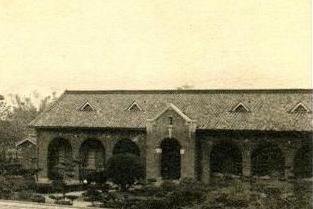
 台湾総督府〔臺灣總督府〕/たいわんそうとくふ
仓田重禄:
明治三十四年1901台湾守备混成旅团/台南卫戍病院/病院附(一等军医正七勋五)
 明治二十九年1896台湾守备混成第三旅团台湾守备步兵第五联队/联队附(一等军医正七勋六)
Monday, March 2, 2015
25 Tai Tsz Temple 廿五 太子廟 27/12/2014
Lot 1
Verse:
 〖籤詩〗: 高聳雲衢去路難,心機用盡不能安;眼前幸有人相助,終見忠良一寸丹。
〖典故〗: < 薛禮進弓摩天嶺>
薛禮(613年-683年),字仁貴,絳州龍門(今山西河津)人,唐太宗唐高宗時期的將軍。是北魏將領薛安都六世孫,出身於河東薛氏世族。
Explanation:
【註釋】
高聳雲衢去路難:雲衢-指高空。摩天嶺高聳入雲霄,要登上實在很困難。
心機用盡不能安:就算是用盡心機想盡辦法,還是無法得到想要的結果(想不出辦法來) 。
眼前幸有人相助:幸好眼前就有貴人來相助(上山賣弓的老頭) 。
終見忠良一寸丹:一寸丹-指心。古人謂心為方寸之地。終於看見忠誠正直的人。
【白話】
薛仁貴攻打摩天嶺,眼看摩天嶺高入雲霄,想盡辦法不得要領,忽然看見一位賣弓的老頭,就假裝成父子上山,終於收服摩天嶺,還得到兩位忠心兄弟相助。
【籤詩斷吉凶】
薛禮攻打摩天嶺,望山興嘆,去路難行,費盡心思,不得要領。告訴求籤人遇到困難要善用機會三思而行,有要領就可輕易達成。如遇貴人,問題有解,一路順勢。運氣:未通。一切的好壞,順乎自然。凡事:新做不可。問婚姻:反覆難成。可以借媒婆的力量來完成。出外:不吉。失物:未日在。官事:和解好。疾病:宜解祭、或更醫。六沖卦:近病、沖-好。久病、沖-死。求大命:聽天由命了。求財:財空福絕,一切籌謀都是白費心機。冬天得此籤,亥子水沖剋世爻,大勢已去,若在巳亥日問此籤,福神絕於日,辰爻財落空,希望全泡湯。
Lot 2
Verse:
 〖籤詩〗: 總是前途莫心勞,求神問聖枉是多,但看雞犬日過後,不須作福事如何。
〖典故〗: 鳳嬌觀音庵問籤中奸臣計 (胡鳳嬌觀音寺行香求懺)
武則天登基。李唐後裔皇太子李旦逃出改名馬進興流浪在胡發家做長工,胡發哥胡登死後留妻女、女鳳嬌投靠叔叔,胡妻文氏同情進興。這晚剛眠忽見祥光月老為鳳嬌和進興繫上紅線,一條金龍金光衝柴房,文氏驚醒原是場怪夢。一早當進興劈柴時右臂果然和鳳嬌一樣有硃砂痣,文氏驚喜敲定說親。幾天後進興辭行叔父要他回去,後會來接丈母娘和鳳嬌,原來前朝遺臣馬周招兵買馬準備推翻武則天,派人四處尋找太子李旦主持大局。鳳嬌等李旦時被馬迪看上不從,馬迪吃了悶虧耍賴散布謠言說進興當強盜已被官府砍頭。鳳嬌傷心欲絕,母文氏不信自認不會看錯人,決定帶鳳嬌到觀音寺問籤。參拜畢出寺門卻不見轎,小尼笑說二位有緣就在此住晚明天再下山,小尼帶母女到禪房赫見馬迪在房內。原來馬迪詭計買通小尼佈陷阱,但吉人天相母女被老佣人胡完救出觀音寺。
〖本故事的啟示〗:萬般都是命,半點不由人。
Explanation:
〖解說〗
前途有命運安排,你只要盡其在我去努力奮鬥,不必勞心去求神問卜,那只是多枉費精神,你要解決的事,只要等待酉、戌日過了以後就會有消息的,不必再去祈福求神。這首籤詩明白告訴當事人,解決問題,唯有靠自己,光是求神問卜,是解決不了問題,雞為酉,犬為戌,故關鍵在酉戌日後,即能獲得答案。
‧求財─微利不吉,定無主意,小心經營之。
‧婚姻─平正之緣,為多培養感情可增情誼。
‧農牧─早冬可也,晚冬不佳,六畜皆可納。
‧失物─戌日者在,他日恐有失落,防再失。
‧行船─財輕微利,雖是小利應小心時者也。
‧訟事─和之為貴,意氣用事則兩敗必俱傷。
‧功名─未能成就,有益求進者再力行可也。
‧六甲─先男後女,是人生大願完成其一也。
‧經商─新業者差,舊業部分平平,順潮流。
‧出外─不可之時,因時運之未到去即失利。
‧治病─運深之時,酉戌日可不畏,悉心治。
‧家運─宅舍難居,求神護佑,作福積德善。
Verse:
 〖籤詩〗: 高聳雲衢去路難,心機用盡不能安;眼前幸有人相助,終見忠良一寸丹。
〖典故〗: < 薛禮進弓摩天嶺>
薛禮(613年-683年),字仁貴,絳州龍門(今山西河津)人,唐太宗唐高宗時期的將軍。是北魏將領薛安都六世孫,出身於河東薛氏世族。
Explanation:
【註釋】
高聳雲衢去路難:雲衢-指高空。摩天嶺高聳入雲霄,要登上實在很困難。
心機用盡不能安:就算是用盡心機想盡辦法,還是無法得到想要的結果(想不出辦法來) 。
眼前幸有人相助:幸好眼前就有貴人來相助(上山賣弓的老頭) 。
終見忠良一寸丹:一寸丹-指心。古人謂心為方寸之地。終於看見忠誠正直的人。
【白話】
薛仁貴攻打摩天嶺,眼看摩天嶺高入雲霄,想盡辦法不得要領,忽然看見一位賣弓的老頭,就假裝成父子上山,終於收服摩天嶺,還得到兩位忠心兄弟相助。
【籤詩斷吉凶】
薛禮攻打摩天嶺,望山興嘆,去路難行,費盡心思,不得要領。告訴求籤人遇到困難要善用機會三思而行,有要領就可輕易達成。如遇貴人,問題有解,一路順勢。運氣:未通。一切的好壞,順乎自然。凡事:新做不可。問婚姻:反覆難成。可以借媒婆的力量來完成。出外:不吉。失物:未日在。官事:和解好。疾病:宜解祭、或更醫。六沖卦:近病、沖-好。久病、沖-死。求大命:聽天由命了。求財:財空福絕,一切籌謀都是白費心機。冬天得此籤,亥子水沖剋世爻,大勢已去,若在巳亥日問此籤,福神絕於日,辰爻財落空,希望全泡湯。
Lot 2
Verse:
〖籤詩〗: 總是前途莫心勞,求神問聖枉是多,但看雞犬日過後,不須作福事如何。〖典故〗: 鳳嬌觀音庵問籤中奸臣計 (胡鳳嬌觀音寺行香求懺)
武則天登基。李唐後裔皇太子李旦逃出改名馬進興流浪在胡發家做長工,胡發哥胡登死後留妻女、女鳳嬌投靠叔叔,胡妻文氏同情進興。這晚剛眠忽見祥光月老為鳳嬌和進興繫上紅線,一條金龍金光衝柴房,文氏驚醒原是場怪夢。一早當進興劈柴時右臂果然和鳳嬌一樣有硃砂痣,文氏驚喜敲定說親。幾天後進興辭行叔父要他回去,後會來接丈母娘和鳳嬌,原來前朝遺臣馬周招兵買馬準備推翻武則天,派人四處尋找太子李旦主持大局。鳳嬌等李旦時被馬迪看上不從,馬迪吃了悶虧耍賴散布謠言說進興當強盜已被官府砍頭。鳳嬌傷心欲絕,母文氏不信自認不會看錯人,決定帶鳳嬌到觀音寺問籤。參拜畢出寺門卻不見轎,小尼笑說二位有緣就在此住晚明天再下山,小尼帶母女到禪房赫見馬迪在房內。原來馬迪詭計買通小尼佈陷阱,但吉人天相母女被老佣人胡完救出觀音寺。
〖本故事的啟示〗:萬般都是命,半點不由人。
Explanation:
〖解說〗
前途有命運安排,你只要盡其在我去努力奮鬥,不必勞心去求神問卜,那只是多枉費精神,你要解決的事,只要等待酉、戌日過了以後就會有消息的,不必再去祈福求神。這首籤詩明白告訴當事人,解決問題,唯有靠自己,光是求神問卜,是解決不了問題,雞為酉,犬為戌,故關鍵在酉戌日後,即能獲得答案。
‧求財─微利不吉,定無主意,小心經營之。
‧婚姻─平正之緣,為多培養感情可增情誼。
‧農牧─早冬可也,晚冬不佳,六畜皆可納。
‧失物─戌日者在,他日恐有失落,防再失。
‧行船─財輕微利,雖是小利應小心時者也。
‧訟事─和之為貴,意氣用事則兩敗必俱傷。
‧功名─未能成就,有益求進者再力行可也。
‧六甲─先男後女,是人生大願完成其一也。
‧經商─新業者差,舊業部分平平,順潮流。
‧出外─不可之時,因時運之未到去即失利。
‧治病─運深之時,酉戌日可不畏,悉心治。
‧家運─宅舍難居,求神護佑,作福積德善。
Got it from the Tai Tsz Temple of dream, 27/12/2014
FORM: 天雷无妄
 1. ䷘无妄:元亨,利貞。其匪正有眚,不利有攸往。
Wu Wang: Wu Wang indicates great progress and success, while there will be advantage in being firm and correct. If (its subject and his action) be not correct, he will fall into errors, and it will not be advantageous for him to move in any direction.
彖傳: 无妄,剛自外來,而為主於內。動而健,剛中而應,大亨以正,天之命也。其匪正有眚,不利有攸往。无妄之往,何之矣?天命不佑,行矣哉?
Tuan Zhuan: In Wu Wang we have the strong (first) line come from the outer (trigram), and become in the inner trigram lord (of the whole figure); we have (the attributes of) motive power and strength; we have the strong line (of the fifth place) in the central position, and responded to (by the weak second): - there will be 'great progress proceeding from correctness; such is the appointment of Heaven. 'If (its subject and his action) be not correct, he will fall into errors, and it will not be advantageous for him to move in any direction:' - whither can he (who thinks he is) free from all insincerity, (and yet is as here described) proceed? Can anything be done (advantageously) by him whom the (will and) appointment of Heaven do not help?
象傳: 天下雷行,物與无妄;先王以茂對時,育萬物。
Xiang Zhuan: The thunder rolls all under the sky, and to (every)thing there is given (its nature), free from all insincerity. The ancient kings, in accordance with this, (made their regulations) in complete accordance with the seasons, thereby nourishing all things.
2. 初九:无妄,往吉。
The first NINE, undivided, shows its subject free from all insincerity. His advance will be accompanied with good fortune.
象傳: 无妄之往,得志也。
Xiang Zhuan: When 'he who is free from insincerity makes any movement,' he will get what he desires.
3. 六二:不耕獲,不菑畬,則利有攸往。
The second SIX, divided, shows one who reaps without having ploughed (that he might reap), and gathers the produce of his third year's fields without having cultivated them the first year for that end. To such a one there will be advantage in whatever direction he may move.
象傳: 不耕獲,未富也。
Xiang Zhuan: 'He reaps without having ploughed:' - (the thought of) riches to be got had not risen (in his mind).
4. 六三:无妄之災,或繫之牛,行人之得,邑人之災。
The third SIX, divided, shows calamity happening to one who is free from insincerity - as in the case of an ox that has been tied up. A passer by finds it (and carries it off), while the people in the neighbourhood have the calamity (of being accused and. apprehended).
象傳: 行人得牛,邑人災也。
Xiang Zhuan: 'The passer-by gets the ox:' - this proves a calamity to the people of the neighbourhood.
5. 九四:可貞,无咎。
The fourth NINE, undivided, shows (a case) in which, if its subject can remain firm and correct, there will be no error.
象傳: 可貞无咎,固有之也。
Xiang Zhuan: 'If he can remain firm and correct there will be no error:' - he firmly holds fast (his correctness).
6. 九五:无妄之疾,勿藥有喜。
The fifth NINE, undivided, shows one who is free from insincerity, and yet has fallen ill. Let him not use medicine, and he will have occasion for joy (in his recovery).
象傳: 无妄之藥,不可試也。
Xiang Zhuan: 'Medicine in the case of one who is free from insincerity!' - it should not be tried (at all).
7. 上九:无妄,行有眚,无攸利。
The topmost NINE, undivided, shows its subject free from insincerity, yet sure to fall into error, if he take action. (His action) will not be advantageous in any way.
象傳: 无妄之行,窮之災也。
Xiang Zhuan: 'The action (in this case) of one who is free from insincerity' will occasion the calamity arising from action (when the time for it is) exhausted.
(by James Legge)
SKILL: 山雷颐(戊子)
 1. ䷚頤: 貞吉。觀頤,自求口實。
Yi: Yi indicates that with firm correctness there will be good fortune (in what is denoted by it). We must look at what we are seeking to nourish, and by the exercise of our thoughts seek for the proper aliment.
彖傳: 頤貞吉,養正則吉也。觀頤,觀其所養也;自求口實,觀其自養也。天地養萬物,聖人養賢,以及萬民;頤之時大矣哉!
Tuan Zhuan: 'Yi indicates that with firm correctness there will be good fortune:' - when the nourishing is correct, there will be good fortune. 'We must look at what we are seeking to nourish:' - we must look at those whom we wish to nourish. 'We must by the exercise of our thoughts seek the proper aliment:' - we must look to our own nourishing of ourselves. Heaven and earth nourish all things. The sages nourish men of talents and virtue, by them to reach to the myriads of the people. Great is (the work intended by this) nourishing in its time!
象傳: 山下有雷,頤;君子以慎言語,節飲食。
Xiang Zhuan: (The trigram representing) a mountain and under it that for thunder form Yi. The superior man, in accordance with this, (enjoins) watchfulness over our words, and the temperate regulation of our eating and drinking.
2. 初九:舍爾靈龜,觀我朵頤,凶。
The first NINE, undivided, (seems to be thus addressed), 'You leave your efficacious tortoise, and look at me till your lower jaw hangs down.' There will be evil.
象傳: 觀我朵頤,亦不足貴也。
Xiang Zhuan: 'You look at me till your (lower) jaw hangs down:' - (the subject of the line) is thus shown unfit to be thought noble.
3. 六二:顛頤,拂經,于丘頤,征凶。
The second SIX, divided, shows one looking downwards for nourishment, which is contrary to what is proper; or seeking it from the height (above), advance towards which will lead to evil.
象傳: 六二征凶,行失類也。
Xiang Zhuan: 'The evil of advance by the subject of the second SIX, (divided),' is owing to his leaving in his movements his proper associates.
4. 六三:拂頤,貞凶,十年勿用,无攸利。
The third SIX, divided, shows one acting contrary to the method of nourishing. However firm he may be, there will be evil. For ten years let him not take any action, (for) it will not be in any way advantageous.
象傳: 十年勿用,道大悖也。
Xiang Zhuan: 'For ten years let him not take any action:' - his course is greatly opposed (to what is right).
5. 六四:顛頤,吉,虎視眈眈,其欲逐逐,无咎。
The fourth SIX, divided, shows one looking downwards for (the power to) nourish. There will be good fortune. Looking with a tiger's downward unwavering glare, and with his desire that impels him to spring after spring, he will fall into no error.
象傳: 顛頤之吉,上施光也。
Xiang Zhuan: 'The good fortune attached to looking downwards for (the power to) nourish,' shows how brilliant will be the diffusion (of that power) from (the subject of the line's) superior position.
6. 六五:拂經,居貞吉,不可涉大川。
The fifth SIX, divided, shows one acting contrary to what is regular and proper; but if he abide in firmness, there will be good fortune. He should not, (however, try to) cross the great stream.
象傳: 居貞之吉,順以從上也。
Xiang Zhuan: 'The good fortune from abiding in firmness' is due to the docility (of the subject of the line) in following (the subject of the line) above.
7. 上九:由頤,厲吉,利涉大川。
The sixth NINE, undivided, shows him from whom comes the nourishing. His position is perilous, but there will be good fortune. It will be advantageous to cross the great stream.
象傳: 由頤厲吉,大有慶也。
Xiang Zhuan: 'The good fortune, notwithstanding the peril of his position, of him from whom comes the nourishing,' affords great cause for congratulation.
(by James Legge)
1. ䷘无妄:元亨,利貞。其匪正有眚,不利有攸往。Wu Wang: Wu Wang indicates great progress and success, while there will be advantage in being firm and correct. If (its subject and his action) be not correct, he will fall into errors, and it will not be advantageous for him to move in any direction.
彖傳: 无妄,剛自外來,而為主於內。動而健,剛中而應,大亨以正,天之命也。其匪正有眚,不利有攸往。无妄之往,何之矣?天命不佑,行矣哉?
Tuan Zhuan: In Wu Wang we have the strong (first) line come from the outer (trigram), and become in the inner trigram lord (of the whole figure); we have (the attributes of) motive power and strength; we have the strong line (of the fifth place) in the central position, and responded to (by the weak second): - there will be 'great progress proceeding from correctness; such is the appointment of Heaven. 'If (its subject and his action) be not correct, he will fall into errors, and it will not be advantageous for him to move in any direction:' - whither can he (who thinks he is) free from all insincerity, (and yet is as here described) proceed? Can anything be done (advantageously) by him whom the (will and) appointment of Heaven do not help?
象傳: 天下雷行,物與无妄;先王以茂對時,育萬物。
Xiang Zhuan: The thunder rolls all under the sky, and to (every)thing there is given (its nature), free from all insincerity. The ancient kings, in accordance with this, (made their regulations) in complete accordance with the seasons, thereby nourishing all things.
2. 初九:无妄,往吉。
The first NINE, undivided, shows its subject free from all insincerity. His advance will be accompanied with good fortune.
象傳: 无妄之往,得志也。
Xiang Zhuan: When 'he who is free from insincerity makes any movement,' he will get what he desires.
3. 六二:不耕獲,不菑畬,則利有攸往。
The second SIX, divided, shows one who reaps without having ploughed (that he might reap), and gathers the produce of his third year's fields without having cultivated them the first year for that end. To such a one there will be advantage in whatever direction he may move.
象傳: 不耕獲,未富也。
Xiang Zhuan: 'He reaps without having ploughed:' - (the thought of) riches to be got had not risen (in his mind).
4. 六三:无妄之災,或繫之牛,行人之得,邑人之災。
The third SIX, divided, shows calamity happening to one who is free from insincerity - as in the case of an ox that has been tied up. A passer by finds it (and carries it off), while the people in the neighbourhood have the calamity (of being accused and. apprehended).
象傳: 行人得牛,邑人災也。
Xiang Zhuan: 'The passer-by gets the ox:' - this proves a calamity to the people of the neighbourhood.
5. 九四:可貞,无咎。
The fourth NINE, undivided, shows (a case) in which, if its subject can remain firm and correct, there will be no error.
象傳: 可貞无咎,固有之也。
Xiang Zhuan: 'If he can remain firm and correct there will be no error:' - he firmly holds fast (his correctness).
6. 九五:无妄之疾,勿藥有喜。
The fifth NINE, undivided, shows one who is free from insincerity, and yet has fallen ill. Let him not use medicine, and he will have occasion for joy (in his recovery).
象傳: 无妄之藥,不可試也。
Xiang Zhuan: 'Medicine in the case of one who is free from insincerity!' - it should not be tried (at all).
7. 上九:无妄,行有眚,无攸利。
The topmost NINE, undivided, shows its subject free from insincerity, yet sure to fall into error, if he take action. (His action) will not be advantageous in any way.
象傳: 无妄之行,窮之災也。
Xiang Zhuan: 'The action (in this case) of one who is free from insincerity' will occasion the calamity arising from action (when the time for it is) exhausted.
(by James Legge)
SKILL: 山雷颐(戊子)
1. ䷚頤: 貞吉。觀頤,自求口實。Yi: Yi indicates that with firm correctness there will be good fortune (in what is denoted by it). We must look at what we are seeking to nourish, and by the exercise of our thoughts seek for the proper aliment.
彖傳: 頤貞吉,養正則吉也。觀頤,觀其所養也;自求口實,觀其自養也。天地養萬物,聖人養賢,以及萬民;頤之時大矣哉!
Tuan Zhuan: 'Yi indicates that with firm correctness there will be good fortune:' - when the nourishing is correct, there will be good fortune. 'We must look at what we are seeking to nourish:' - we must look at those whom we wish to nourish. 'We must by the exercise of our thoughts seek the proper aliment:' - we must look to our own nourishing of ourselves. Heaven and earth nourish all things. The sages nourish men of talents and virtue, by them to reach to the myriads of the people. Great is (the work intended by this) nourishing in its time!
象傳: 山下有雷,頤;君子以慎言語,節飲食。
Xiang Zhuan: (The trigram representing) a mountain and under it that for thunder form Yi. The superior man, in accordance with this, (enjoins) watchfulness over our words, and the temperate regulation of our eating and drinking.
2. 初九:舍爾靈龜,觀我朵頤,凶。
The first NINE, undivided, (seems to be thus addressed), 'You leave your efficacious tortoise, and look at me till your lower jaw hangs down.' There will be evil.
象傳: 觀我朵頤,亦不足貴也。
Xiang Zhuan: 'You look at me till your (lower) jaw hangs down:' - (the subject of the line) is thus shown unfit to be thought noble.
3. 六二:顛頤,拂經,于丘頤,征凶。
The second SIX, divided, shows one looking downwards for nourishment, which is contrary to what is proper; or seeking it from the height (above), advance towards which will lead to evil.
象傳: 六二征凶,行失類也。
Xiang Zhuan: 'The evil of advance by the subject of the second SIX, (divided),' is owing to his leaving in his movements his proper associates.
4. 六三:拂頤,貞凶,十年勿用,无攸利。
The third SIX, divided, shows one acting contrary to the method of nourishing. However firm he may be, there will be evil. For ten years let him not take any action, (for) it will not be in any way advantageous.
象傳: 十年勿用,道大悖也。
Xiang Zhuan: 'For ten years let him not take any action:' - his course is greatly opposed (to what is right).
5. 六四:顛頤,吉,虎視眈眈,其欲逐逐,无咎。
The fourth SIX, divided, shows one looking downwards for (the power to) nourish. There will be good fortune. Looking with a tiger's downward unwavering glare, and with his desire that impels him to spring after spring, he will fall into no error.
象傳: 顛頤之吉,上施光也。
Xiang Zhuan: 'The good fortune attached to looking downwards for (the power to) nourish,' shows how brilliant will be the diffusion (of that power) from (the subject of the line's) superior position.
6. 六五:拂經,居貞吉,不可涉大川。
The fifth SIX, divided, shows one acting contrary to what is regular and proper; but if he abide in firmness, there will be good fortune. He should not, (however, try to) cross the great stream.
象傳: 居貞之吉,順以從上也。
Xiang Zhuan: 'The good fortune from abiding in firmness' is due to the docility (of the subject of the line) in following (the subject of the line) above.
7. 上九:由頤,厲吉,利涉大川。
The sixth NINE, undivided, shows him from whom comes the nourishing. His position is perilous, but there will be good fortune. It will be advantageous to cross the great stream.
象傳: 由頤厲吉,大有慶也。
Xiang Zhuan: 'The good fortune, notwithstanding the peril of his position, of him from whom comes the nourishing,' affords great cause for congratulation.
(by James Legge)
Tuesday, February 24, 2015
Setrap Mantra 金甲衣护法心咒 16/12/2014
Setrap
【Wrathful Emanation of Buddha Amitabha】
 The Protector Setrap appears to us as a wrathful emanation of the Buddha Amitabha, where he protects us as angry, though concerned, parents would towards their wayward children ~ hoping to wake them to their senses and bring them onto the correct path.
Though in a wrathful form, the Protector is always motivated by compassion and loving care for all sentient beings.
As an Enlightened Buddha, Setrap’s apparent fury is never directed against any beings. Instead, his wrath is directed at destroying our inner and secret defilements of attachment, anger, ignorance and our self-cherishing attitudes which bring us so much suffering.
Utterly opposed to attachment, Setrap acts with objectless equanimity towards all beings. Being the great enemy of anger, Setrap acts with supreme love towards all beings.
Being the victor over ignorance, Setrap directly cognises Emptiness and possesses the highest wisdom that perceives the best manner of liberating all sentient beings. As the antidote to the self-cherishing attitude, Setrap cherishes all beings above Himself.
With sincere prayers and request of His assistance, Setrap is known to accomplish the swiftest destruction of outer, inner and secret obstacles in our path towards Enlightenment.
His spiritual energy in the form of sound that helps to transform the mind (Mantra):
OM MAHA YAK CHA TSA SOHA
Dharmapala Setrap Chen or more commonly known as “The Wild Tsen” or “Setrap Protector” is actually an ancient protector who comes from the Holy Land of Bodhgaya where Lord Shakyamuni Buddha was enlightened. Setrap Protector is actually the wrathful form of Buddha Amitabha that sworn to protect the teachings of Buddhism to Lord Sakyamuni Buddha. Setrap Protector is brought to Tibet by the translator called Loden Sherab (Ngog Lotsawa) from India just to spread and make the dharma grow. Setrap Chen’s name actually derive from the word “golden cuirass” and it refers to the Gold Armor that he wears in Battles, This Symbolized the battle with our minds and also the spiritual side with the Demons of both inner and outer.
Setrap Protector is an ancient Protector that exists before our age and sworn to protect the teachings of Buddhism to Lord Sakyamuni Buddha himself and renewed his vow with Guru Rinpoche. At that time Lord Setrap’s Practices are most commonly practiced in Buddhist Monasteries in both Nalanda and Bodhgaya in India. Traveled with the translator called Loden Sherab to the Land of Snow (Tibet) from India just to spread and make the dharma grow. Just before Loden Sherab starts his journey to Tibet, the abbot of Bodhgaya Monastery was said to have entrusted him with Setrap Protector for the success in growth of Buddhism in Tibet.
Setrap Protector being the wrathful emanation of Buddha Amitabha has been the protector for Ganden Shartse Monastery one of the two college of Gaden Monastery for many hundreds of years. Setrap Protector’s tasks among these degenerate times are good in pacifying our obstacles and also to make conditions conducive for everything good; namely the practice of dharma which leads to our eternal happiness. His role of being a wrathful emanation is very similar like angry parents towards their child. Although sometimes our parents seems to be angry at us, but the anger is always motivated by love and concern towards their child’s well being. Buddha Amitabha emanate into this wrathful form is to direct into our inner and secret defilement of our own attachments, anger, ignorance and or ego. As an “Enlightened Buddha” despite his wrathful outer looks, Setrap Protector is well known for accomplishing the deadliest and swiftest destruction for all inner, outer and secret obstacles. As stated in the ”Setrap Puja Book” (Shartse Jewel) the cudgel that Lord Setrap holds with his right hand are made of ‘sandalwood from the forests of Malaya’ – (Malaya in now known as Malaysia). As a proof of a being a devoted protector of Buddhism, Setrap Protector actually sew Guru Rinpoche’s shoe to his crown when he renewed his vow as a proof.
Therefore Setrap Protector is “One of the Best” of the Enlightened being that we can pray to when we have any obstacles to pacify, especially those who keeps us away from Dharma.
(Source: http://www.chinabuddhismencyclopedia.com/en/index.php?title=Setrap)
金甲衣
【阿弥陀佛的忿怒化身】
在传统藏传佛教里,金甲衣护法是阿弥陀佛的忿怒相。祂的示现如同父母对于孩子的严厉管教,希望能唤醒他们的良知,带领他们走上正途,因此其背后的动机是出于对有情众生的大慈悲心。我们也可以说金甲衣护法所展现的忿怒相是专门对治我们内心里因无明所引发出的贪瞋痴之染习。金甲衣护法是彻底证悟的佛,祂的忿怒相绝非针对某位众生﹐而是平等慈悲地对待一切有情众生。由于祂已克服内在的瞋心,因此能施予众生无限的大爱。由于祂已断除无明之根﹐证悟空性﹐因此能运用大智慧善诱众生走上菩提之道。由于祂代表了强烈我执的对治剂,因此祂把他人的福祉看得比自己还重要。当我们生起强烈的心念祈求祂的加持及庇护时,祂将能帮助我们迅速克服外在﹐内在及密相上的修行上之障碍。
金甲衣护法心咒 :
嗡 玛哈 呀 叉 扎 梭哈
OM(佛陀) MAHA(大) YAK CHA(迦)(生灵) TSA (扎) SOHA(给我加持)
金甲衣护法(Setrap)
藏传佛教所谓“Dharmapala”意即保护佛法的守护神,而Setrap则意谓金盔甲。六百年来,在藏传黄教大寺——甘丹萨济寺,殊胜的金甲衣护法一直被得道的明师、大成就者、禅师、住持和转世高僧等供养着。单看像甘丹萨济寺这样一座大寺院,也选择了殊胜的金甲衣护法成为他们寺院里的守护神祇,我想祂肯定会为众生带来巨大的护佑。孰不知金甲衣是西方净土阿弥陀佛的忿怒化身,所以我们根本不需要对祂产生任何的疑惑。祂停留在世上的目的是为了利益很多的众生。对华人来说,金甲衣与你很有殊缘,因为广为华人熟知的大乘佛法都以阿弥陀佛持修为主流。虽然如此,金甲衣却不会理会你是谁,只要你认真地持修祂的法门,严守戒律和学习佛法转化个人的行为,那么祂就会在身边守护着你。你会发现金甲衣在不知觉中影响了你的人生,许多不能做到的事情都能完成,许多曾经失去的东西也可以再找回来,许多让你误入歧途的事物,亦可以重头找到对的新方向。(Source: http://resources.tsemtulku.com/cn/cn-buddhas/%E6%8A%A4%E6%B3%95-cn-buddhas/%E9%87%91%E7%94%B2%E8%A1%A3.html)
(http://www.setrap.net/)
【Wrathful Emanation of Buddha Amitabha】
The Protector Setrap appears to us as a wrathful emanation of the Buddha Amitabha, where he protects us as angry, though concerned, parents would towards their wayward children ~ hoping to wake them to their senses and bring them onto the correct path.Though in a wrathful form, the Protector is always motivated by compassion and loving care for all sentient beings.
As an Enlightened Buddha, Setrap’s apparent fury is never directed against any beings. Instead, his wrath is directed at destroying our inner and secret defilements of attachment, anger, ignorance and our self-cherishing attitudes which bring us so much suffering.
Utterly opposed to attachment, Setrap acts with objectless equanimity towards all beings. Being the great enemy of anger, Setrap acts with supreme love towards all beings.
Being the victor over ignorance, Setrap directly cognises Emptiness and possesses the highest wisdom that perceives the best manner of liberating all sentient beings. As the antidote to the self-cherishing attitude, Setrap cherishes all beings above Himself.
With sincere prayers and request of His assistance, Setrap is known to accomplish the swiftest destruction of outer, inner and secret obstacles in our path towards Enlightenment.
His spiritual energy in the form of sound that helps to transform the mind (Mantra):
OM MAHA YAK CHA TSA SOHA
Dharmapala Setrap Chen or more commonly known as “The Wild Tsen” or “Setrap Protector” is actually an ancient protector who comes from the Holy Land of Bodhgaya where Lord Shakyamuni Buddha was enlightened. Setrap Protector is actually the wrathful form of Buddha Amitabha that sworn to protect the teachings of Buddhism to Lord Sakyamuni Buddha. Setrap Protector is brought to Tibet by the translator called Loden Sherab (Ngog Lotsawa) from India just to spread and make the dharma grow. Setrap Chen’s name actually derive from the word “golden cuirass” and it refers to the Gold Armor that he wears in Battles, This Symbolized the battle with our minds and also the spiritual side with the Demons of both inner and outer.
Setrap Protector is an ancient Protector that exists before our age and sworn to protect the teachings of Buddhism to Lord Sakyamuni Buddha himself and renewed his vow with Guru Rinpoche. At that time Lord Setrap’s Practices are most commonly practiced in Buddhist Monasteries in both Nalanda and Bodhgaya in India. Traveled with the translator called Loden Sherab to the Land of Snow (Tibet) from India just to spread and make the dharma grow. Just before Loden Sherab starts his journey to Tibet, the abbot of Bodhgaya Monastery was said to have entrusted him with Setrap Protector for the success in growth of Buddhism in Tibet.
Setrap Protector being the wrathful emanation of Buddha Amitabha has been the protector for Ganden Shartse Monastery one of the two college of Gaden Monastery for many hundreds of years. Setrap Protector’s tasks among these degenerate times are good in pacifying our obstacles and also to make conditions conducive for everything good; namely the practice of dharma which leads to our eternal happiness. His role of being a wrathful emanation is very similar like angry parents towards their child. Although sometimes our parents seems to be angry at us, but the anger is always motivated by love and concern towards their child’s well being. Buddha Amitabha emanate into this wrathful form is to direct into our inner and secret defilement of our own attachments, anger, ignorance and or ego. As an “Enlightened Buddha” despite his wrathful outer looks, Setrap Protector is well known for accomplishing the deadliest and swiftest destruction for all inner, outer and secret obstacles. As stated in the ”Setrap Puja Book” (Shartse Jewel) the cudgel that Lord Setrap holds with his right hand are made of ‘sandalwood from the forests of Malaya’ – (Malaya in now known as Malaysia). As a proof of a being a devoted protector of Buddhism, Setrap Protector actually sew Guru Rinpoche’s shoe to his crown when he renewed his vow as a proof.
Therefore Setrap Protector is “One of the Best” of the Enlightened being that we can pray to when we have any obstacles to pacify, especially those who keeps us away from Dharma.
(Source: http://www.chinabuddhismencyclopedia.com/en/index.php?title=Setrap)
金甲衣
【阿弥陀佛的忿怒化身】
在传统藏传佛教里,金甲衣护法是阿弥陀佛的忿怒相。祂的示现如同父母对于孩子的严厉管教,希望能唤醒他们的良知,带领他们走上正途,因此其背后的动机是出于对有情众生的大慈悲心。我们也可以说金甲衣护法所展现的忿怒相是专门对治我们内心里因无明所引发出的贪瞋痴之染习。金甲衣护法是彻底证悟的佛,祂的忿怒相绝非针对某位众生﹐而是平等慈悲地对待一切有情众生。由于祂已克服内在的瞋心,因此能施予众生无限的大爱。由于祂已断除无明之根﹐证悟空性﹐因此能运用大智慧善诱众生走上菩提之道。由于祂代表了强烈我执的对治剂,因此祂把他人的福祉看得比自己还重要。当我们生起强烈的心念祈求祂的加持及庇护时,祂将能帮助我们迅速克服外在﹐内在及密相上的修行上之障碍。
金甲衣护法心咒 :
嗡 玛哈 呀 叉 扎 梭哈
OM(佛陀) MAHA(大) YAK CHA(迦)(生灵) TSA (扎) SOHA(给我加持)
金甲衣护法(Setrap)
藏传佛教所谓“Dharmapala”意即保护佛法的守护神,而Setrap则意谓金盔甲。六百年来,在藏传黄教大寺——甘丹萨济寺,殊胜的金甲衣护法一直被得道的明师、大成就者、禅师、住持和转世高僧等供养着。单看像甘丹萨济寺这样一座大寺院,也选择了殊胜的金甲衣护法成为他们寺院里的守护神祇,我想祂肯定会为众生带来巨大的护佑。孰不知金甲衣是西方净土阿弥陀佛的忿怒化身,所以我们根本不需要对祂产生任何的疑惑。祂停留在世上的目的是为了利益很多的众生。对华人来说,金甲衣与你很有殊缘,因为广为华人熟知的大乘佛法都以阿弥陀佛持修为主流。虽然如此,金甲衣却不会理会你是谁,只要你认真地持修祂的法门,严守戒律和学习佛法转化个人的行为,那么祂就会在身边守护着你。你会发现金甲衣在不知觉中影响了你的人生,许多不能做到的事情都能完成,许多曾经失去的东西也可以再找回来,许多让你误入歧途的事物,亦可以重头找到对的新方向。(Source: http://resources.tsemtulku.com/cn/cn-buddhas/%E6%8A%A4%E6%B3%95-cn-buddhas/%E9%87%91%E7%94%B2%E8%A1%A3.html)
(http://www.setrap.net/)
Sunday, February 22, 2015
Sign 15/12/2014
〖詩曰〗
利在中邦出戰證,一番獲醜在五庭,鳳街丹詔歸陽畔,得享佳名四海榮。
〖簽釋〗
很少有人能夠得到這支簽,除非你是一個出將入相大德大才的君子。你在中興之時,也就正是眼下,將要率領一隊人馬向西了征。這場戰爭當然是以勝利告終的,並且在西北地方的大城市中,獲得很大的收穫。醜,不是丟醜。醜為牛。形體粗壯,僅次於龍,與虎不相上下。這裡預示著顯赫的職位或學位,是一種文職而非武官。這次出征的勝利,奠定了你一生的名利,富貴的基礎。銜丹詔歸陽畔,一個女人帶升遷的文種來到你的身邊,並從此終生陪伴你,照顧你,護衛你。象徵著中年以後將有女貴人為你傳遞資訊,處處扶助,得以安康。你的威名遠播,四海傳楊,享有崇高的威望和信譽。你將得到同僚,下屬的愛戴和擁護,當然你也會體察民情,關心愛護他們,不這樣的話,就是反其道而行之,予自己不利。
利在中邦出戰證,一番獲醜在五庭,鳳街丹詔歸陽畔,得享佳名四海榮。
〖簽釋〗
很少有人能夠得到這支簽,除非你是一個出將入相大德大才的君子。你在中興之時,也就正是眼下,將要率領一隊人馬向西了征。這場戰爭當然是以勝利告終的,並且在西北地方的大城市中,獲得很大的收穫。醜,不是丟醜。醜為牛。形體粗壯,僅次於龍,與虎不相上下。這裡預示著顯赫的職位或學位,是一種文職而非武官。這次出征的勝利,奠定了你一生的名利,富貴的基礎。銜丹詔歸陽畔,一個女人帶升遷的文種來到你的身邊,並從此終生陪伴你,照顧你,護衛你。象徵著中年以後將有女貴人為你傳遞資訊,處處扶助,得以安康。你的威名遠播,四海傳楊,享有崇高的威望和信譽。你將得到同僚,下屬的愛戴和擁護,當然你也會體察民情,關心愛護他們,不這樣的話,就是反其道而行之,予自己不利。
Saturday, February 21, 2015
大宝广博楼阁善住秘密陀罗尼咒 30/11/2014
 又稱 –善住咒︰唵 嘛尼 乏及里 吽
【心陀罗尼】
【梵音】om. mani vajre. hum
【古译】唵。麻抳 嚩日礼。 吽。
【释义】法宝 金刚三昧 成就
【随心陀罗尼】
【梵音】om. mani dvare hum phat
【古译】唵。麻抳 驮嚩礼。 吽。泮吒。
【释义】法宝 却敌门户 摧破
【根本陀罗尼】大宝广博楼阁善住秘密陀罗尼
【梵音】 namahsarva tathagatanam.
【古译】曩莫 萨嚩(wa)怛他噶(ga)多南。
【释义】礼敬 一切 如来众!
om. vipula garbhe maniprabhe.
唵。尾补攞噶陛(bei)。 麻抳 钵啰陛。
广博 藏 法宝 光明
tathagata nidarsane. mani mani. suprabhe.
怛他噶多。儞捺舍宁。麻抳 麻抳。苏钵啰陛。
如来 显现 法宝 法宝 妙光明
vimale sagara gambhire.
尾麻黎(lei) 娑噶啰。俨(gam)鼻隸(rli)。
无垢 海 甚深
hum hum. jvala jvala. buddha vilokite.
吽 吽。 入嚩攞(la),入嚩攞。 没驮 尾卢枳帝(dei)。
光焰 光焰 佛陀 观察
guhya dhistita garbhe. svaha.
麌(gu)呬(hei)夜(ya)。地瑟耻多。噶陛。 娑嚩诃。
秘密 加持 藏 圆满成就
【原文】曩莫萨嚩怛他噶多南。
唵。尾补攞噶陛。麻抳钵啰陛。
怛他噶多。儞捺舍宁。麻抳麻抳。苏钵啰陛。
尾麻黎娑噶啰。俨鼻隸。
吽吽。入嚩攞,入嚩攞。没驮尾卢枳帝。
麌呬夜。地瑟耻多。噶陛。娑嚩诃。
【读音】那摩 萨尔瓦 达他噶达南
唵 尾布拉 噶尔备 麻尼 钵喇备
达他噶达 尼达尔沙内 麻尼 麻尼 苏钵喇备
尾麻类 萨噶喇 感比锐
吽 吽 及瓦拉 及瓦拉 布达 尾卢给徳(dei)
谷黑牙 地斯提达 噶尔备 司瓦哈

【大宝广博楼阁善住秘密陀罗尼咒轮功用】
闻此陀罗尼者。当于无上菩提得不退转。一切佛法当得现前。证得一切三摩地。一切陀罗尼法悉皆现前。善能降伏一切魔军。燃大法炬。一切善根当得现前。满足六波罗蜜。能解一切地狱饿鬼傍生焰魔界阿苏啰众。及生老病死忧悲苦恼。永得解脱。此陀罗尼威力。若读若诵受持。若佩身上若书衣中。若置幢上。若书经卷及墙壁牌板。乃至闻声手触乃影其身。及转触余人。决定当得不退转无上菩提。能于现世获无量百千功德。远离诸罪成就一切善根摧伏诸魔。录自《大正藏》第十九册页624上。
Monday, February 2, 2015
He Xiangu 何仙姑 3/9/2014
He Xiangu (meaning "Immortal Woman He") is the only female deity among the Eight Immortals figures in Daoism. She is often described as a morally pure woman, an ideal daughter, and a selfless seeker after spiritual freedom. In iconography, she is typically pictured bearing a lotus flower or a peach (of immortality). She is one of the few female deities revered as members of the Daoist pantheon.
Member of the Eight Immortals:
 He Xiangu is one of the illustrious Eight Immortals (Ba Xian), a group of Daoist/folk deities who play an important role in Chinese religion and culture. While they are famed for espousing and teaching Daoist philosophy and cultivation practices, they are also figures of popular myth and legend that are known for their devotion to the downtrodden and their collective lifestyle of “free and easy wandering.” Though they are most often depicted and described in the context of their group, each has their own particular set of tales, iconography, and areas of patronage.
(by New World Encyclopedia)
 Legend:
He Xiangu (何仙姑), also named He Qiong (何瓊). She was from Yong Prefecture (today Linglin County) during the Tang Dynasty, or from a wealthy and generous family in Zēngchéng County (增城縣), Guangdong.
At birth she had six long hairs on the crown of her head. When she was about 14 or 15, a divine personage appeared to her in a dream and instructed her to eat powdered mica, in order that her body might become etherealized and immune from death. So she swallowed it, and also vowed to remain a virgin.
Later on by slow degrees she gave up taking ordinary food.
The Empress Wu dispatched a messenger to summon her to attend at the palace, but on the way there, she disappeared.
One day during the Jinglong (景龍) period (about 707 CE), she ascended to heaven in broad daylight, and became a Xian (Taoist Immortal).
Her lotus flower improves one's health, mental and physical. She is depicted holding a lotus flower, and sometimes with the musical instrument known as Shēng, or a fènghuáng bird to accompany her. She may also carry a bamboo ladle or fly-whisk. (from Wikipedia)
Member of the Eight Immortals:
He Xiangu is one of the illustrious Eight Immortals (Ba Xian), a group of Daoist/folk deities who play an important role in Chinese religion and culture. While they are famed for espousing and teaching Daoist philosophy and cultivation practices, they are also figures of popular myth and legend that are known for their devotion to the downtrodden and their collective lifestyle of “free and easy wandering.” Though they are most often depicted and described in the context of their group, each has their own particular set of tales, iconography, and areas of patronage.(by New World Encyclopedia)
 Legend:
 He Xiangu (何仙姑), also named He Qiong (何瓊). She was from Yong Prefecture (today Linglin County) during the Tang Dynasty, or from a wealthy and generous family in Zēngchéng County (增城縣), Guangdong.
At birth she had six long hairs on the crown of her head. When she was about 14 or 15, a divine personage appeared to her in a dream and instructed her to eat powdered mica, in order that her body might become etherealized and immune from death. So she swallowed it, and also vowed to remain a virgin.
Later on by slow degrees she gave up taking ordinary food.
The Empress Wu dispatched a messenger to summon her to attend at the palace, but on the way there, she disappeared.
One day during the Jinglong (景龍) period (about 707 CE), she ascended to heaven in broad daylight, and became a Xian (Taoist Immortal).
Her lotus flower improves one's health, mental and physical. She is depicted holding a lotus flower, and sometimes with the musical instrument known as Shēng, or a fènghuáng bird to accompany her. She may also carry a bamboo ladle or fly-whisk. (from Wikipedia)
Subscribe to:
Posts (Atom)